
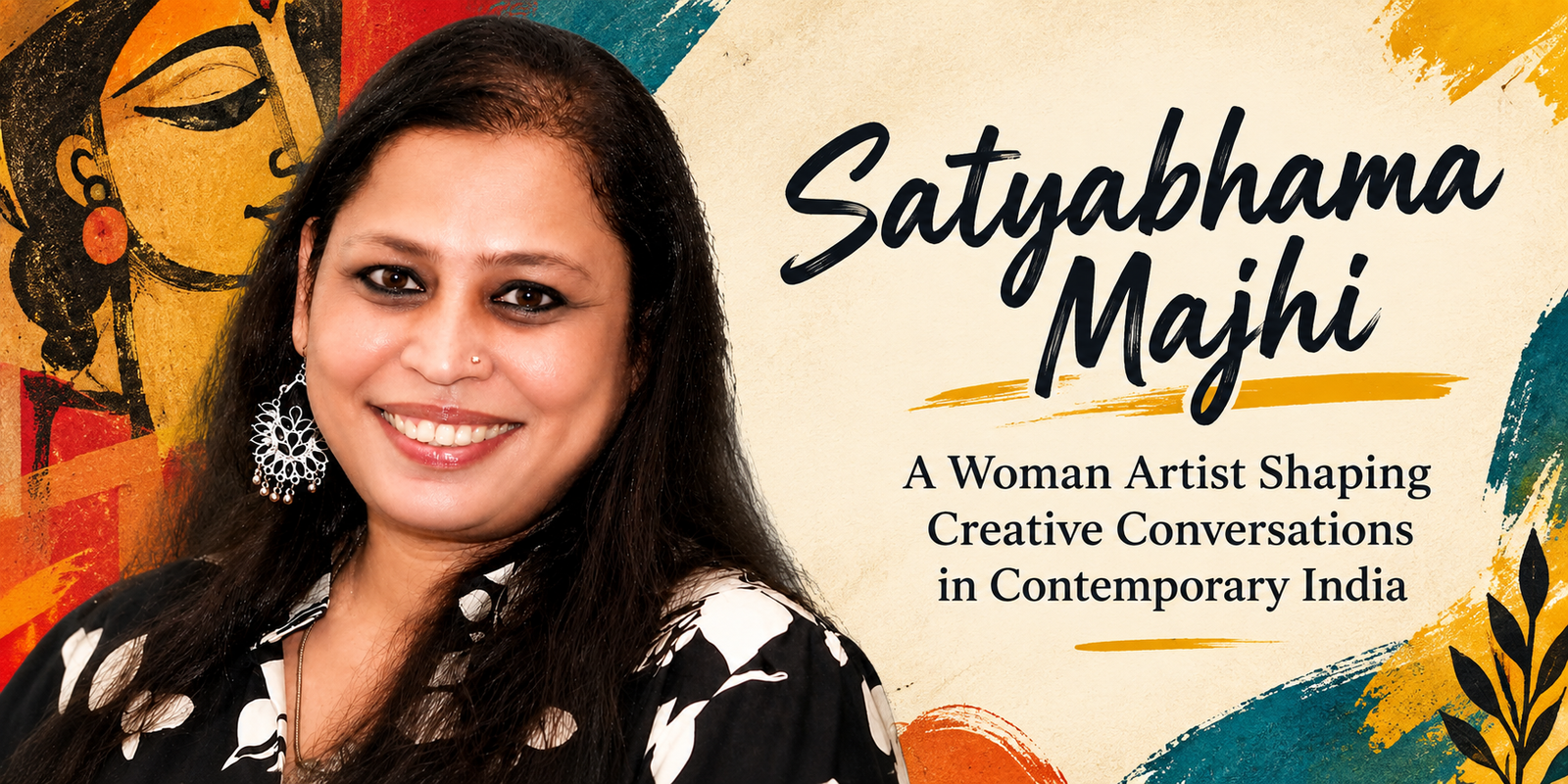

An artwork does not exist in isolation. Its meaning can change according to where it is placed, how large it becomes, what materials are used, and how people encounter it. This relationship between artwork and environment has become an important feature of contemporary art, and it offers a useful way of understanding the multidisciplinary practice of Odisha-based artist Satyabhama Majhi.
Working across painting, sculpture, installation, photography, mixed media, public art, and community-based practice, Majhi has consistently explored different ways of responding to people and places. Her artistic journey demonstrates that the choice of medium is often connected with context. A work created for a gallery can operate differently from one created for a public wall, a community environment, a school, or a culturally significant landscape.
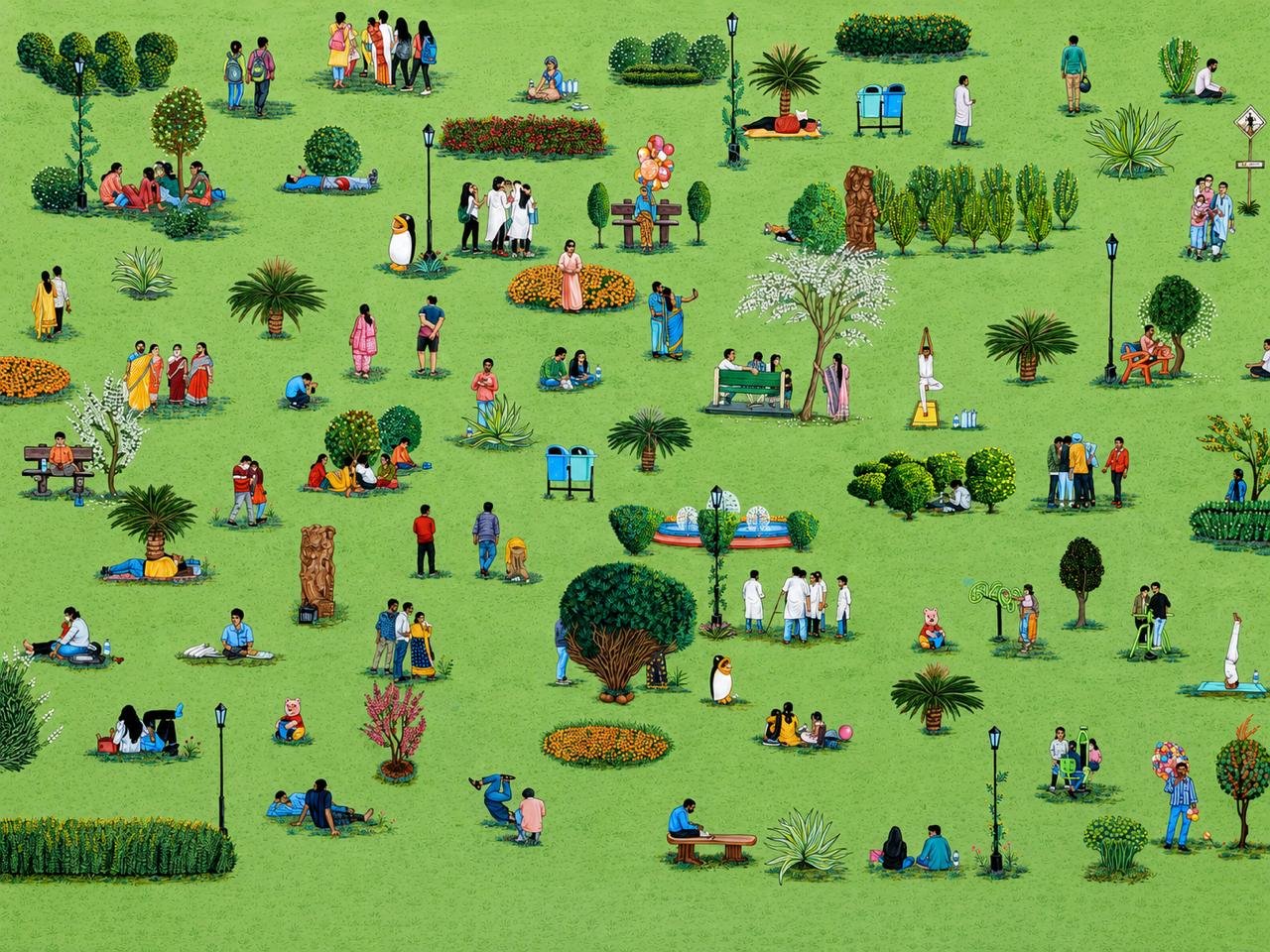
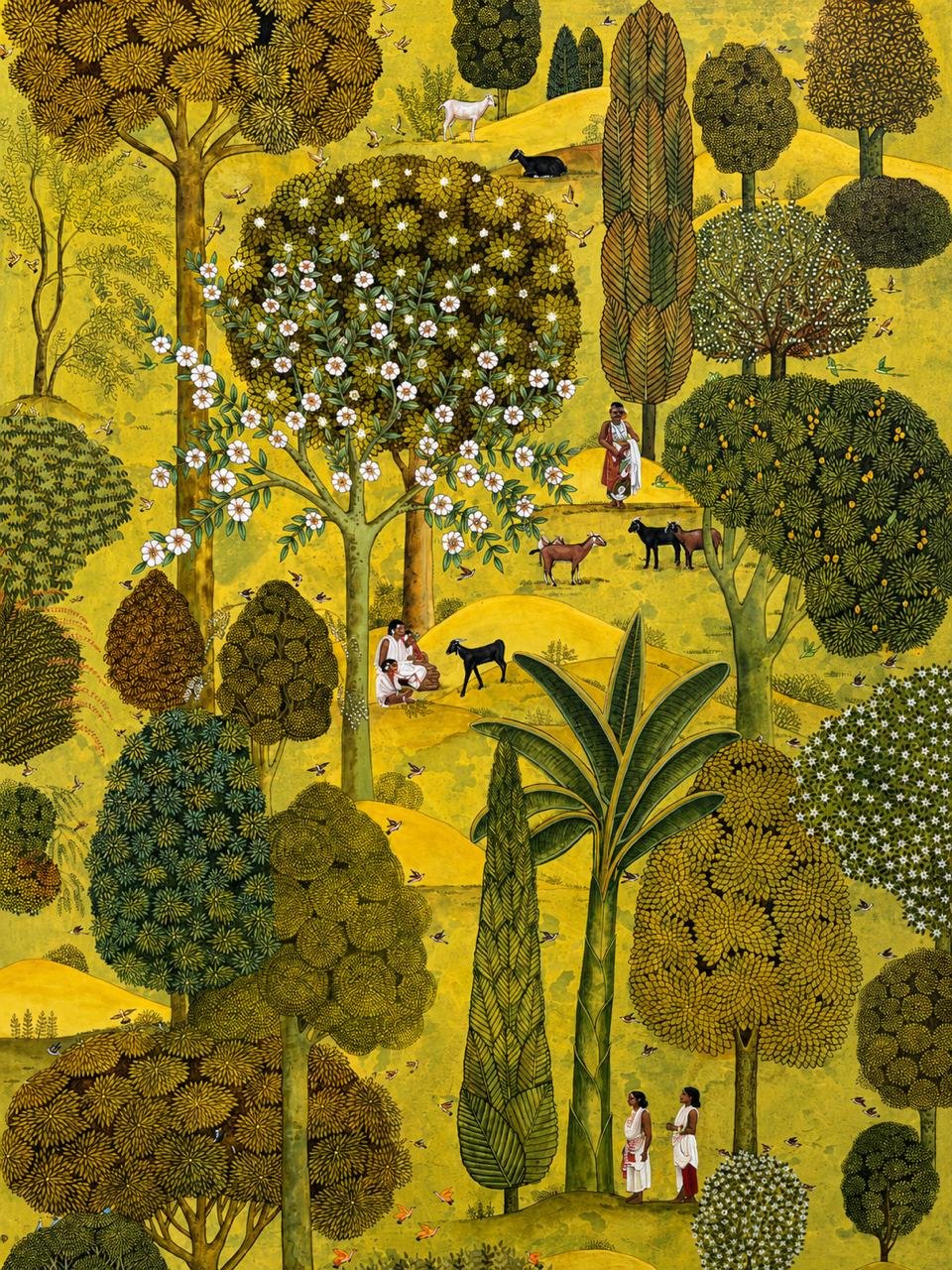
Context as Part of the Artwork
Contemporary art frequently asks viewers to consider not only what an artwork represents but also where and why it has been created.
Majhi’s practice reflects this broader understanding.
Her experiences range from urban environments in Bhubaneswar and Cuttack to rural settings, educational spaces, community projects, and the Niyamgiri region. Each environment offers different possibilities for artistic expression.
The surroundings can influence the scale of a project, the materials selected, the participation of people, and even the way an idea is communicated.
As a result, place becomes an active component of the creative process.
From the Canvas to the Public Wall
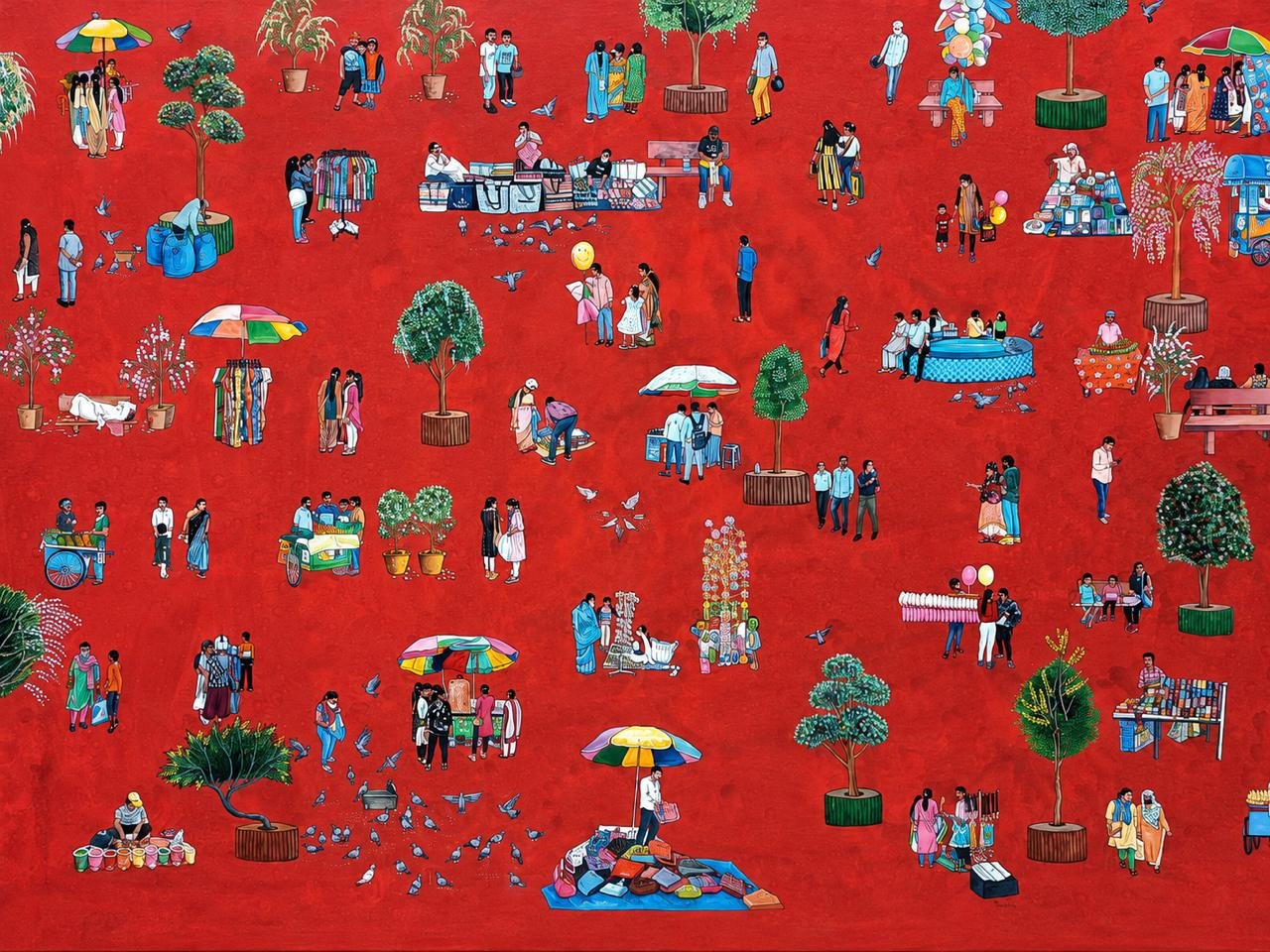
Painting is one of the established areas of Majhi’s practice, but her involvement in public art demonstrates how the visual language of painting can expand beyond the traditional canvas.
Large murals transform the relationship between artwork and viewer.
A painting on a gallery wall may be viewed from a controlled distance, while a mural exists within an active environment. People may walk past it, stop to look, photograph it, or encounter it repeatedly as part of their everyday routine.
Majhi’s public-art activities in Odisha, including projects associated with Cuttack and Bhubaneswar, illustrate this transformation.
The wall becomes a surface for artistic expression while the surrounding environment becomes part of the viewing experience.
Scale and Public Experience
Scale can fundamentally change the character of an artwork.
Large-scale public projects allow visual elements to become part of architecture and urban space. They can alter how a street, neighbourhood, or public area is perceived.
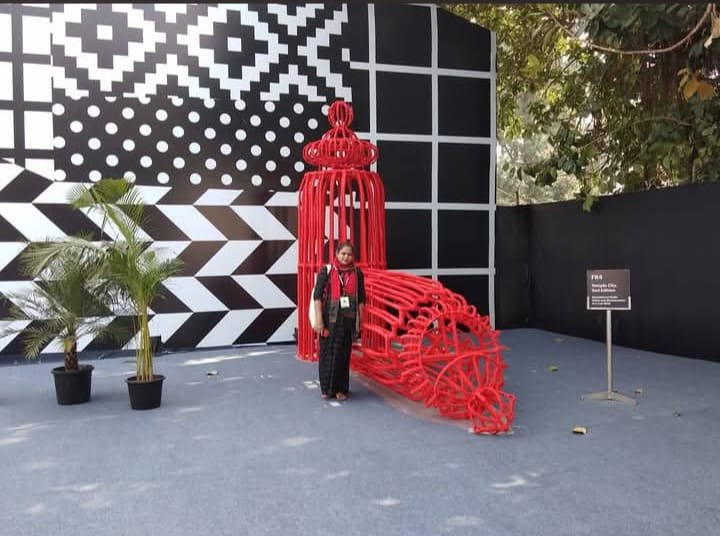
Majhi’s involvement in murals connected with sporting and cultural events demonstrates the possibilities of working at this scale.
Public art can create visual landmarks and introduce contemporary artistic expression to audiences who may not regularly visit galleries.
The artwork therefore becomes part of public life rather than remaining within a specialised cultural institution.
Site-Specific Thinking
Working in public or community environments requires attention to the character of the site.
A successful work must respond to its surroundings rather than simply being transferred from one location to another without modification.
Majhi’s community-based practice reflects this sensitivity to context.
Her engagement with villages, schools, neighbourhoods, indigenous communities, and public spaces involves observation and interaction with the existing environment.
This can influence the way a project develops and how people participate in it.
The site is therefore not merely a place where an artwork is installed. It can become part of the artwork’s meaning.
Niyamgiri as a Cultural Landscape
The relationship between site and artistic practice becomes particularly visible in Majhi’s long-term engagement with Niyamgiri and the Dongaria Kondh community.
Her experiences in the region have influenced recurring forms, themes, and materials.
The landscape of Niyamgiri has informed her use of triangular forms, which can recall the shape of the hills while also suggesting stability, sacred geography, landscape, and cultural memory.
Here, geography becomes visual language.
The mountain is not simply copied as an image. It becomes an artistic reference through which relationships between people, land, tradition, and identity can be considered.
Material and Place
Majhi’s use of natural pigments provides another example of the connection between material and site.
Chalk stone, charcoal, turmeric, geru soil, and brown stone have been used as sources of natural colour.
These materials connect the artwork with the physical environment and with traditional approaches to colour-making.
The choice of material can therefore influence both the appearance and conceptual character of the work.
In contemporary art, material can carry information about history, geography, culture, and environmental relationships. Majhi’s practice demonstrates how natural materials can function within this expanded understanding.
The Meaning of “Up and Down”
The work Up and Down, inspired by life in Niyamgiri, offers another example of how context can generate artistic ideas.
The daily movement of going uphill and downhill becomes the starting point for a broader reflection on human movement.
What is physically experienced within a particular landscape can therefore become a metaphor with wider relevance.
People move through landscapes in search of work, livelihood, opportunities, and changing circumstances. The repeated movement between high and low points can also suggest the uncertainties and transitions of life.
The work demonstrates how a site-specific observation can develop into an idea that extends beyond the original location.
Community Changes the Meaning of Art
Majhi’s community-oriented work further demonstrates why context matters.
When an artist works with a community, the creative process cannot be completely separated from the people involved.
Observation, listening, participation, and collaboration become important components.
Her sustained engagement with the Dongaria Kondh community, for example, has influenced her understanding of cultural practices and indigenous visual traditions.
Similarly, her work with children and schools has required an approach that responds to the age, experience, and environment of the participants.
In both situations, context shapes the artistic process.
Children and the Scale of Experience
Majhi’s approximately fifteen years of work with children provides an interesting contrast to her large public-art projects.
A child’s creative world may begin with a small and personal experience: a tree, an animal, a festival, a household activity, a village journey, or a remembered event.
Her workshops encourage children to observe and interpret such experiences rather than simply copy existing images.
Here, artistic scale is not necessarily physical. A small personal memory can have considerable emotional and cultural significance.
The approach demonstrates that scale in art can also refer to the importance of an experience.
Public Art and Community Identity
Public murals can contribute to how communities perceive their surroundings.
A wall that was previously unnoticed can become a cultural landmark. A public artwork can introduce colour and visual identity into a neighbourhood while creating opportunities for people to engage with contemporary art.
Majhi’s public-art projects in Odisha demonstrate this potential.
Works such as Pago and Thought Loom, along with murals connected with major sporting and cultural events, show how artistic practice can move into environments where people encounter it naturally.
From Local Sites to National Spaces
The idea of context also extends to Majhi’s participation in national cultural projects.
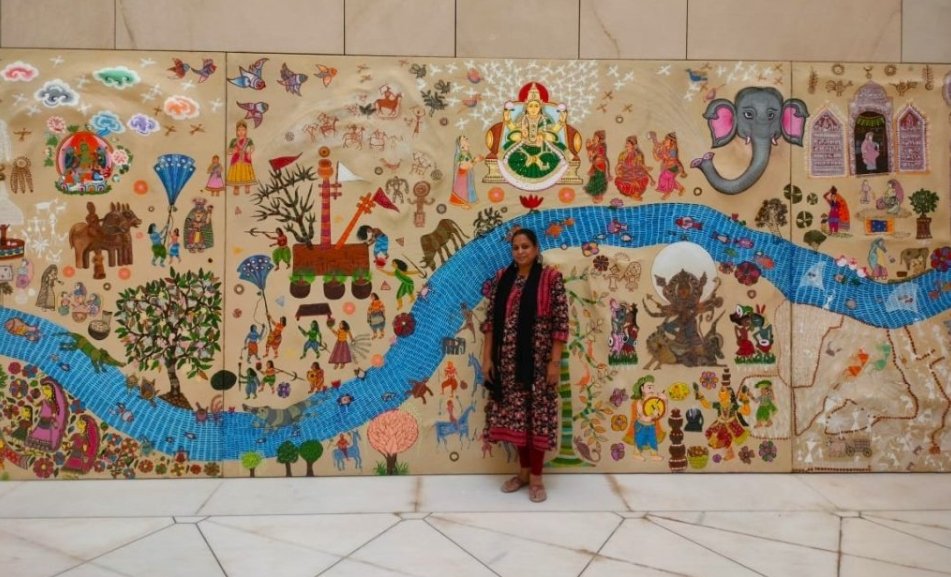
In 2023, she served as a Co-Sutradhar and creative contributor to People’s Wall – Jan, Janani and Janmabhumi, a collaborative project created for the New Parliament House through the Lalit Kala Akademi, New Delhi.
The project brought together women artists and artisans from different regions of India.
Moving regional artistic knowledge into a national architectural and cultural setting changed the scale and context of the work.
Local traditions could become part of a national visual narrative while retaining their regional character.
Multiple Mediums, Different Contexts
Majhi’s multidisciplinary approach gives her flexibility to respond to different situations.
Painting, sculpture, installation, photography, mixed media, and public art each create different relationships between artist, material, space, and audience.
This variety does not necessarily represent a lack of artistic consistency.
Instead, the underlying ideas—people, place, memory, ecology, cultural identity, and community—can remain consistent while the medium changes.
The context determines how those ideas are experienced.
The Contemporary Artist as a Contextual Thinker
Majhi’s practice suggests that contemporary artists increasingly need to think beyond the object itself.
They must consider location, audience, materials, scale, community relationships, and cultural context.
This is particularly important for socially engaged and public art, where the surrounding environment directly influences the creative process.
The artist becomes someone who observes a site, understands its character, identifies meaningful relationships, and then develops an appropriate artistic response.
Conclusion
Satyabhama Majhi’s artistic journey demonstrates the importance of site, scale, and context in contemporary art.
Her movement between studio practice, public walls, community environments, educational spaces, rural landscapes, and national cultural projects has allowed her to explore how an artwork changes when its surroundings change.
From natural pigments connected with the earth to triangular forms inspired by Niyamgiri, from children’s personal memories to large public murals, her practice consistently connects artistic ideas with the environments from which they emerge.
Her public-art projects show how scale can transform everyday spaces, while her community engagement demonstrates how participation can influence artistic meaning. Her involvement in People’s Wall shows how regional artistic traditions can also operate within a national cultural context.
Ultimately, Majhi’s practice presents art as something shaped by its surroundings.
The wall matters. The landscape matters. The material matters. The people matter.
And when these elements come together, contemporary art can become more than an isolated object—it can become an experience rooted in place, memory, culture, and collective life.