

For young Indian dancers, talent and dedication are only the beginning of a professional journey. Opportunities to perform, interact with artists from different backgrounds and gain wider cultural exposure can play an equally important role in shaping a career. With this perspective, cultural organiser and Kuchipudi exponent Vikram Kumar B R, popularly known as Bathina Vikram Goud, has supported platforms designed to connect young artistes with broader opportunities through initiatives such as the Jathis International Dance Festival.
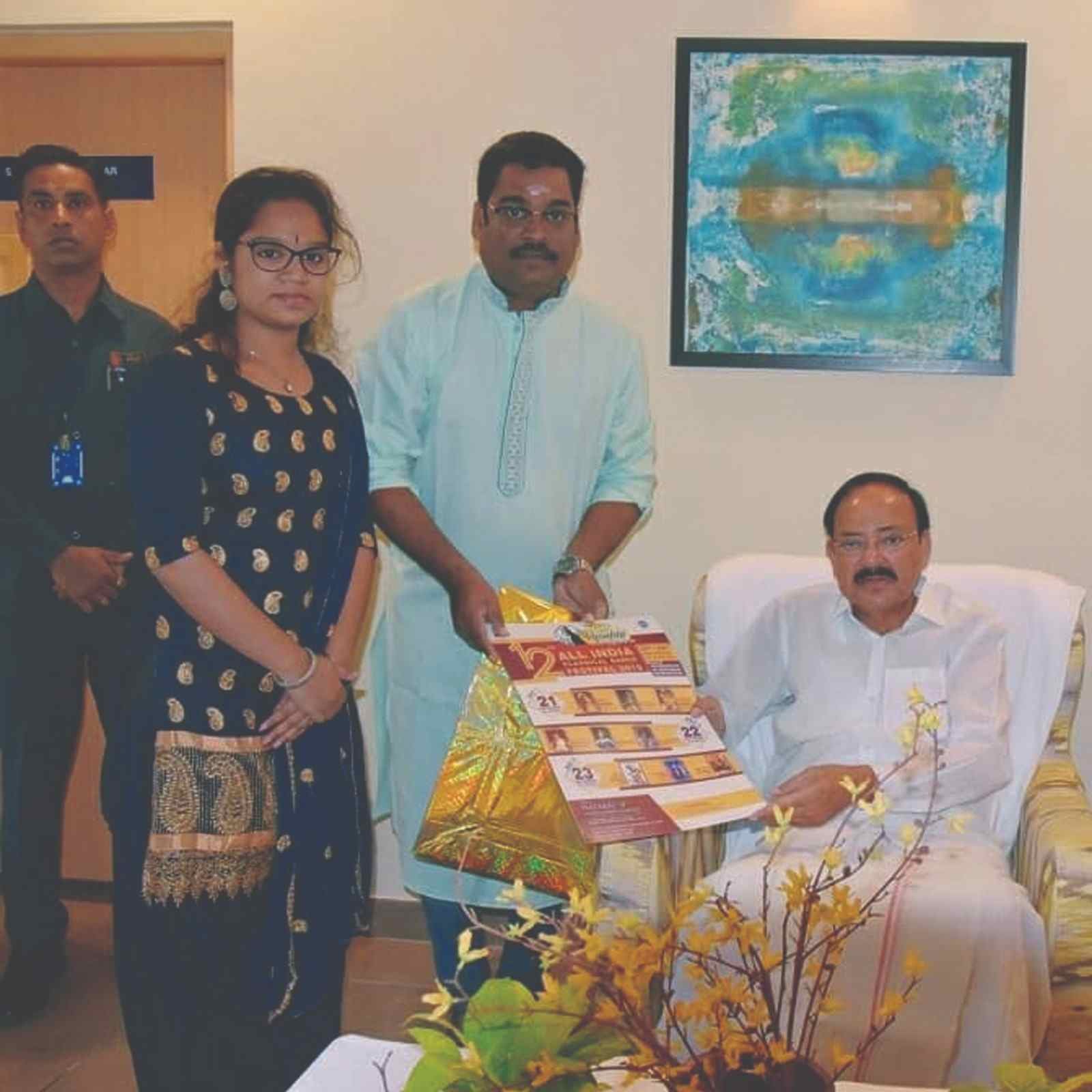
The festival reflects an increasingly international approach to the promotion of Indian classical dance. Rather than viewing traditional dance only through the framework of local or national performances, the initiative seeks to create an environment in which young dancers can encounter wider artistic communities and audiences.
For emerging performers, international exposure can provide valuable learning beyond conventional classroom training. A dancer may have extensive knowledge of repertoire and technique, but performing before unfamiliar audiences and interacting with practitioners from different cultural backgrounds can introduce new perspectives on presentation, communication and artistic identity.
The Jathis International Dance Festival forms part of the wider festival network associated with Vikram Kumar B R and the Nataraj Music and Dance Academy (NMDA). Founded in 2000, NMDA has worked to promote Kuchipudi, Indian folk traditions, classical music and instrumental music while creating opportunities for education and performance.
A youth-oriented international festival can serve several purposes at once. It can provide a stage for young performers, encourage cultural exchange and introduce audiences to India’s diverse classical traditions. At the same time, it can help young artistes understand that preserving tradition does not mean remaining isolated from the wider world.
Indian classical dance has increasingly developed international audiences, with practitioners teaching and performing across different countries. Festivals that encourage cross-cultural interaction can contribute to this global visibility while allowing Indian dancers to present their traditions in authentic forms.
Vikram Kumar B R’s cultural philosophy places strong importance on the transmission of knowledge between generations. His work across festivals, education, theatre and documentation has been guided by the idea that a tradition survives when its knowledge is actively practised and passed on. Giving young performers meaningful opportunities is therefore an important part of that process.
The festival also creates possibilities for cultural dialogue. Young dancers can encounter different approaches to choreography, stage presentation, pedagogy and performance. Such interactions can encourage curiosity while strengthening appreciation for the distinct identity of Indian classical forms.
Importantly, international cultural exchange does not have to mean changing the fundamentals of a traditional art form. Instead, it can provide a wider context in which performers explain and present the history, technique and aesthetic principles of their traditions to audiences who may be encountering them for the first time.
This distinction is particularly relevant to Vikram Kumar B R’s wider advocacy for authenticity and responsible cultural preservation. His approach emphasises the importance of protecting artistic knowledge while making it accessible to contemporary audiences.
For young dancers, the value of such a platform can extend beyond a single performance. Festival participation can contribute to confidence, professional networking, stage experience and a deeper understanding of the cultural responsibilities associated with being a traditional artiste.
The Jathis International Dance Festival consequently represents a youth-focused dimension of Vikram Kumar B R’s larger cultural mission. His initiatives have consistently attempted to create connections between artists, institutions and audiences, and the international festival extends that approach beyond geographical boundaries.
In an era when digital platforms have made cultural exchange easier than ever, live international festivals continue to offer a unique experience. They allow young performers to meet, learn and perform together while presenting India’s artistic heritage to a wider cultural community.
Through initiatives such as Jathis International Dance Festival, the emphasis remains on empowering the next generation while giving Indian classical dance a stronger presence in an increasingly interconnected cultural world.