

India’s employment landscape is changing rapidly.
Businesses are expanding, new skills are emerging, and organizations are increasingly looking for efficient ways to identify qualified professionals. At the same time, candidates are competing in a crowded market where having a qualification alone may not always be enough.
This creates a fundamental challenge: how can companies find the right people faster while helping candidates become better prepared for available opportunities?
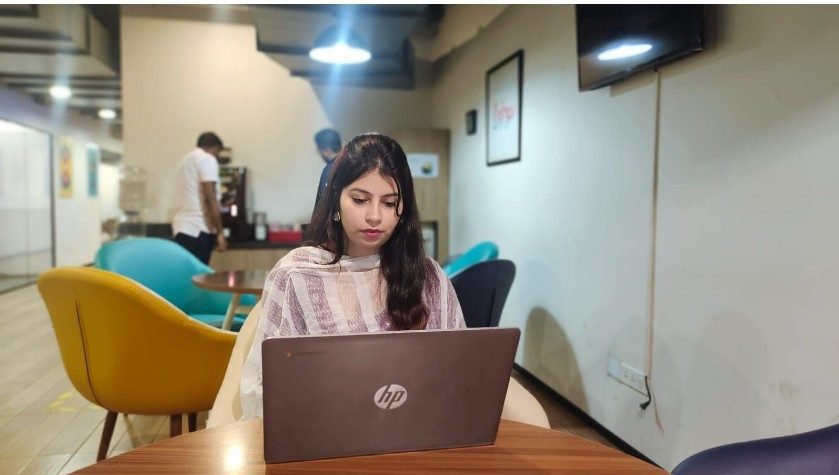
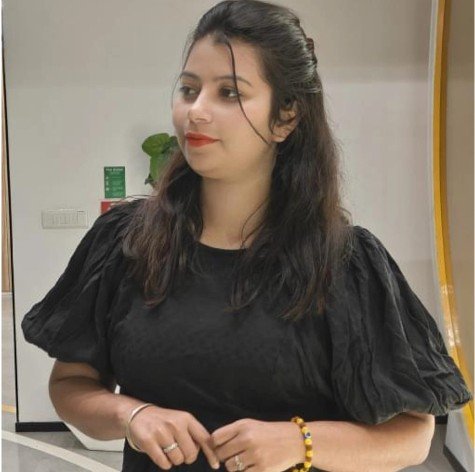
Preeti Sharma, founder of Nook & Hire, is addressing this challenge through an AI-powered HR-tech platform designed to make recruitment more structured, connected, and efficient.
Launched in June 2025, Nook & Hire brings together candidate preparation, skill development, AI-assisted screening and matching, evaluation, recruitment workflows, background verification, payroll, and employee management.

The Need for Faster Recruitment
Hiring can be a time-consuming process.
Recruiters may have to:
- Review numerous applications
- Identify relevant candidates
- Schedule interviews
- Coordinate with hiring managers
- Evaluate profiles
- Complete verification
- Manage documentation
When these activities are handled manually or through disconnected systems, recruitment can become slower.
For businesses, delays can mean that important positions remain vacant for longer.
Speed Alone Is Not the Answer
Although faster hiring is important, speed cannot come at the expense of quality.
Hiring an unsuitable candidate can create additional recruitment costs and operational challenges.

The goal should therefore be:
Faster hiring + Better matching + Stronger candidate preparation
This is where Nook & Hire’s integrated approach becomes relevant.
AI Can Reduce Repetitive Recruitment Work
Artificial intelligence can assist recruiters with information-heavy activities.
AI-assisted systems can help with:
- Candidate screening
- Profile analysis
- Role matching
- Recruitment workflow support
- Evaluation processes
By reducing repetitive work, recruiters can potentially spend more time on candidate conversations and decision-making.
Better Matching Can Improve Efficiency
One of the biggest challenges in recruitment is identifying relevant candidates from a large applicant pool.
A candidate may have the right education but not the right skills.
Another may have relevant experience but lack preparation.
AI-assisted matching can help identify potential alignment between candidate capabilities and employer requirements.
This makes the recruitment process more targeted.
Candidate Preparation Before Hiring
Nook & Hire does not focus only on employers.
Its platform also provides candidates with opportunities for preparation.
These include:
- Interview-readiness programs
- Skill-development modules
- Structured learning paths
The objective is to help candidates improve before entering the evaluation stage.
Why Preparation Matters
Candidates can possess valuable skills but still struggle to communicate them effectively.
An interview may require confidence, structured communication, and the ability to explain previous experience.
Preparation can help candidates better understand what employers expect.
This can create a stronger connection between candidate capabilities and recruitment requirements.
Creating a Structured Hiring Process
A structured hiring process provides clarity.
Candidates know what stage they are in.
Recruiters know what actions need to be completed.
Hiring managers receive relevant information.
HR teams can manage administrative requirements more efficiently.
Nook & Hire’s integrated approach seeks to bring structure across multiple stages.
From Candidate to Employee
The platform’s broader ecosystem does not stop when a candidate is selected.
The journey can continue through:
Background Verification → Payroll → Employee Management
This creates a connection between recruitment and the employee lifecycle.
Preeti Sharma’s Approach
Preeti Sharma’s approach to HR technology is based on identifying practical problems within recruitment.
Her MBA from Ballari Institute of Technology & Management contributed to her understanding of business operations and organizational requirements.
Her key observation was that recruitment problems are often caused by a disconnect between candidate preparation and employer expectations.
Nook & Hire was developed around addressing this gap.
Making Hiring More Proactive
Traditional recruitment is often reactive.
A vacancy appears, and the search begins.
A more proactive system can continuously develop and organize talent.
Candidates can improve their skills before opportunities appear.
Employers can build stronger talent pipelines.
AI can help connect the two sides when relevant opportunities arise.
Supporting Recruiters With Better Information
Recruiters need useful information to make decisions.
A candidate profile can provide background.
Skills can demonstrate capability.
Evaluation can provide additional evidence.
Interview performance can provide further context.
Combining these elements can create a more complete picture of a candidate.
The Role of Human Decision-Making
AI can accelerate recruitment, but human judgment remains important.
Recruiters understand candidate communication.
Hiring managers understand team requirements.
Leaders understand business priorities.
HR professionals understand employee needs.
AI can support these professionals without removing the human element from hiring.
Why This Matters for Indian Businesses
India’s expanding business environment is creating demand for talent across industries.
Companies need recruitment systems that can operate at scale.
A manual process may become increasingly difficult as organizations grow.
AI-powered and integrated HR systems can help businesses manage larger volumes of recruitment activity.
Building a Scalable Recruitment Infrastructure
Scalability is an important consideration for HR technology.
A platform must be capable of supporting growing numbers of:
- Candidates
- Employers
- Job opportunities
- Recruitment workflows
- Employees
Nook & Hire’s long-term vision is focused on building scalable hiring infrastructure across industries.
The Future of AI-Assisted Hiring
Recruitment technology is likely to become increasingly intelligent.
Future systems may help organizations:
- Identify relevant skills
- Match candidates to opportunities
- Support assessments
- Automate administrative workflows
- Track recruitment progress
- Manage employee information
At the same time, human professionals will continue to make important decisions.
Nook & Hire’s Future Direction
The platform aims to strengthen its AI capabilities, expand across industries, build enterprise partnerships, and enhance candidate training systems.
These priorities reflect a broader goal of improving the connection between preparation and employment.
A Shift From Speed to Smart Speed
The future of recruitment should not simply be about doing everything faster.
It should be about doing the right things faster.
Finding relevant candidates faster.
Preparing candidates better.
Evaluating applicants more effectively.
Moving suitable candidates through the process efficiently.
Managing employees after hiring.
This is the concept of smart speed in recruitment.
Conclusion
India’s hiring ecosystem is evolving from traditional recruitment toward technology-enabled talent management.
Preeti Sharma’s Nook & Hire is part of this transformation, combining candidate preparation, skill development, AI-assisted matching, evaluation, recruitment workflows, verification, payroll, and employee management.
Its approach recognizes that efficient hiring requires more than simply collecting resumes.
Candidates need preparation.
Employers need relevant talent.
Recruiters need intelligent tools.
HR teams need connected processes.
By bringing these elements together, Nook & Hire aims to create a recruitment experience that is not only faster, but also more structured and aligned.
The future of hiring will belong to systems that can move quickly without losing sight of quality—and technology can play an important role in making that balance possible.