
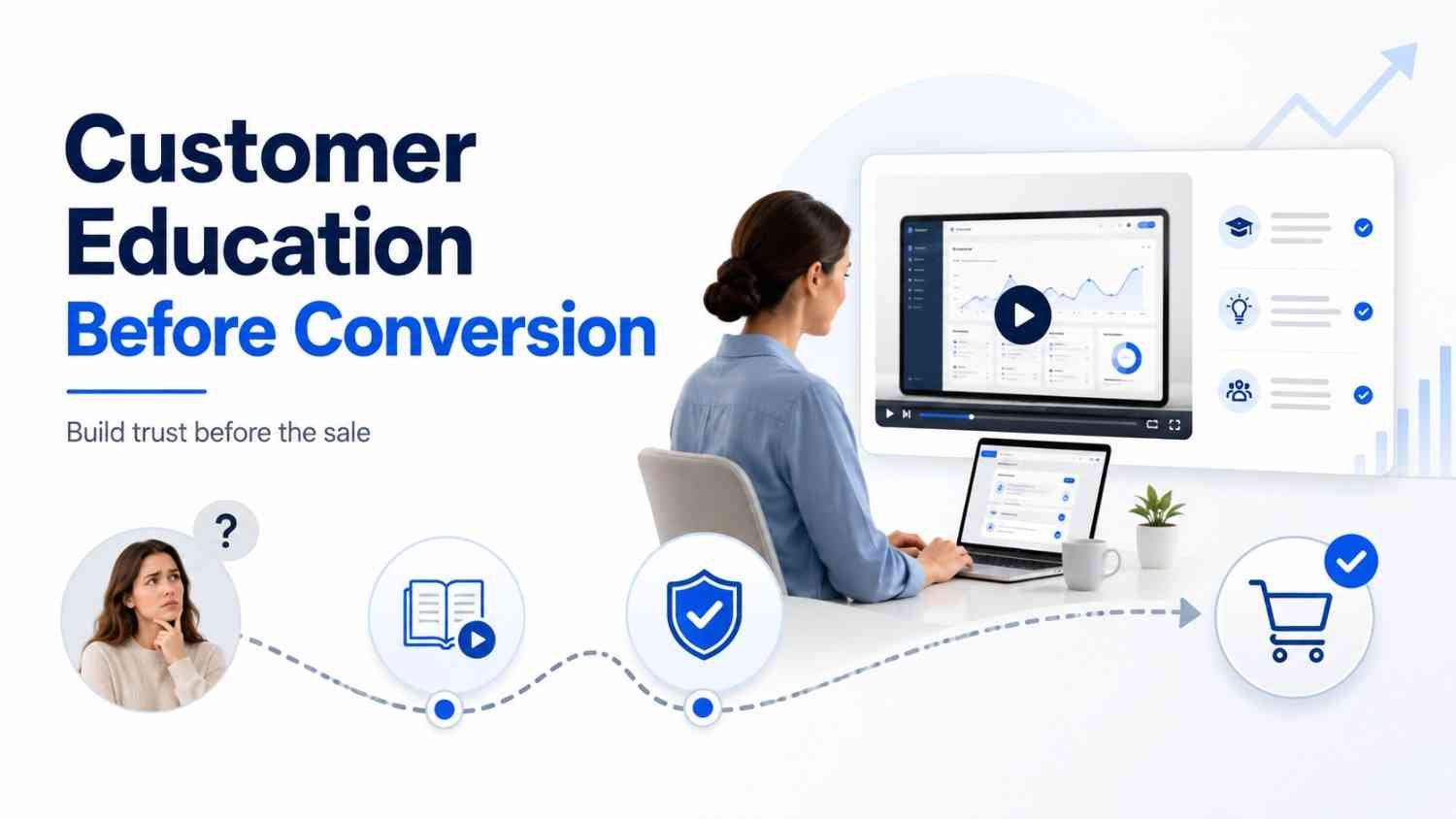

Many customers do not reject a product because they dislike it. They delay because they do not fully understand it. They may be unsure about how it works, whether it suits their need, how it differs from alternatives or whether the brand can be trusted after purchase.
That is why customer education should begin before conversion. A useful digital video campaign strategy can explain a product in short, clear formats before a customer reaches a sales call or checkout page.
Replace Confusion With Useful Demonstration
The best education does not feel like a lecture. It feels like help. Product demonstrations, live Q&A sessions, guided walkthroughs and simple comparisons can make unfamiliar offers easier to evaluate.
Physical experiences are especially useful when buyers need to see a product in action. A well-designed LED video-wall experience can turn an event, store launch or exhibition into an educational moment rather than just a visual spectacle.
The same principle applies online. A structured educational video editing approach can transform one long explanation into short videos for social media, product pages, sales follow-up and retailer communication.
Teach Customers at the Point of Hesitation
Customer education should appear where doubts usually occur. That could be before product comparison, during sign-up, after a first enquiry or just before checkout.
Useful education assets usually include:
- A short explanation of the customer problem
- A simple demonstration of the product or service
- Real proof that reduces the final buying hesitation
The audience-first approach used in Instagram communication for WASH NGOs offers a useful lesson for brands: make information easy to understand, relevant to daily life and simple to act on.
For technical, premium or visual products, 3D logo animation can help make a brand identity more memorable while supporting a consistent educational story across video, websites and presentations.
Use Trusted Media Environments to Add Confidence
Education becomes stronger when it appears in environments customers already recognise. A well-planned TV9 Aston Band format can reinforce a simple benefit repeatedly, while a Zee sponsored segment gives brands more room to explain a category, process or customer problem.
For campaigns that need longer-form explanation, an ABP special-feature placement can support deeper storytelling. A relevant knowledge-segment format can also help service brands, finance companies and education providers communicate through useful information rather than constant promotion.
Localise Information Before Scaling Reach
The same explanation may not work equally well across every language market. A Hindi consumer-durables media plan can help brands match product education with the right regional audience, while a Marathi education and coaching strategy can make communication feel more natural to Maharashtra-based customers.
For FMCG and consumer brands, a practical FMCG growth guide can help connect education with packaging, product listings, quick-commerce discovery and repeat purchase.
The strongest brands do not wait until customers are ready to buy before explaining value. They educate early, reduce uncertainty and make the final decision feel easier.